
Embracing the Biggest Loggers: Indonesian Tycoon Threatens Borneo’s Forests
APRIL’s strategy for sourcing timber from deforesters in Kalimantan.
Jakarta, June 23, 2026—One of Indonesia’s largest pulp and paper producers is suspending its no-deforestation policy to source wood from two suppliers that have recently cleared more rainforest than any other companies in the plantation sector.
This policy retreat follows catastrophic flooding and landslides that struck three provinces on the island of Sumatra in late November 2025. The disaster prompted the government to revoke permits for 28 companies. Three of those permits supplied wood to the APRIL Group’s flagship pulp mill in Riau, with combined concessions covering 245,118 hectares.
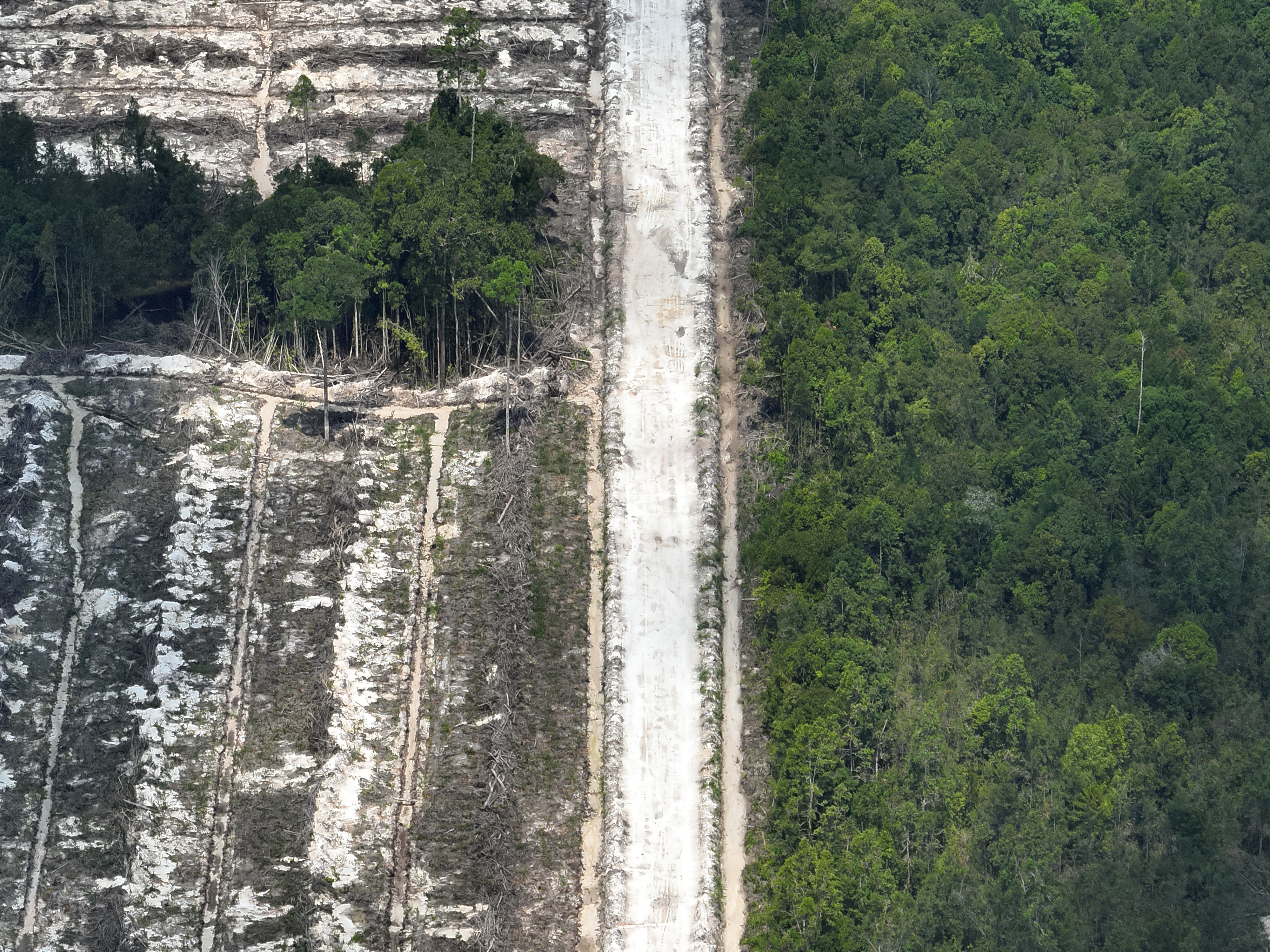
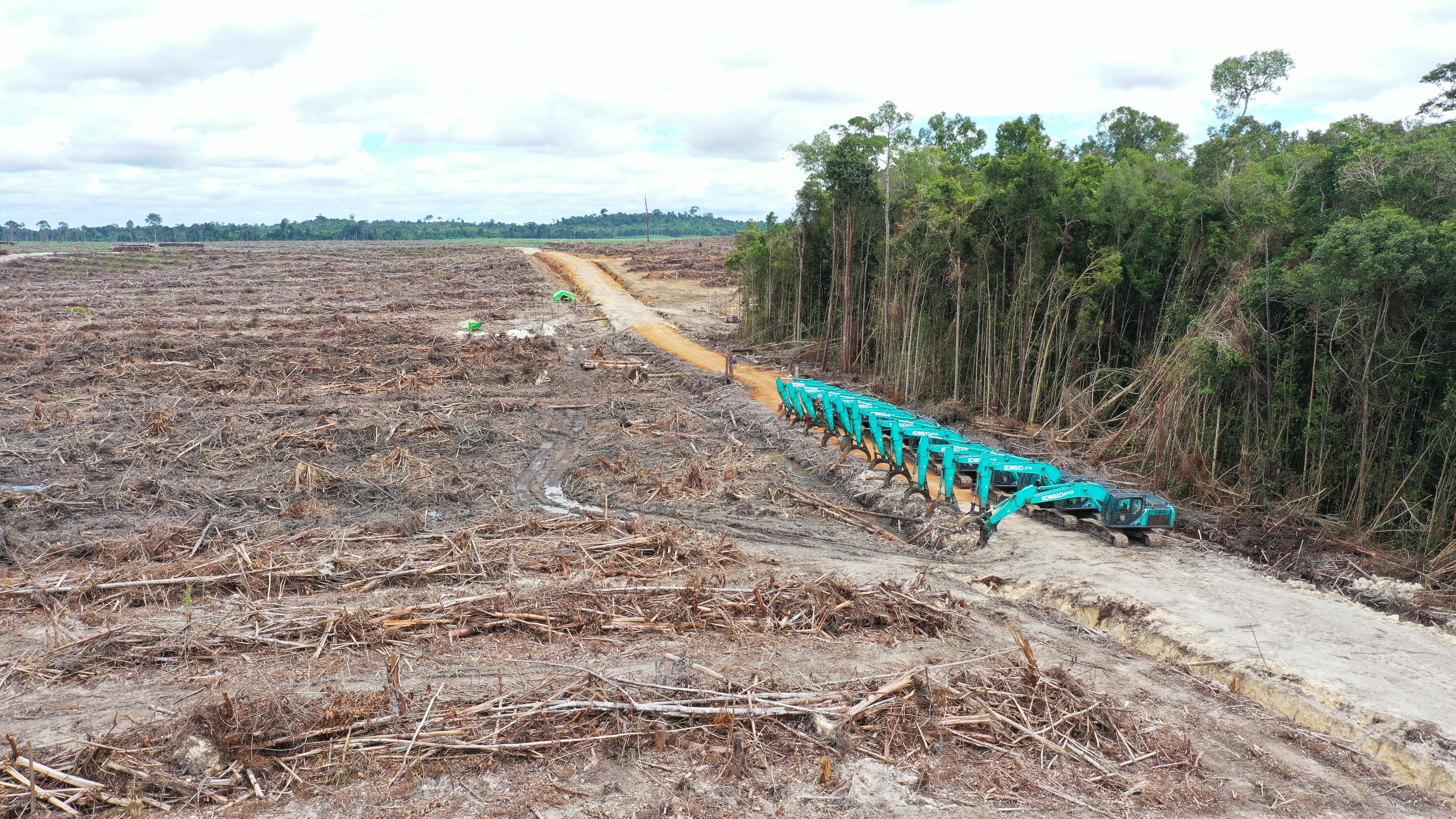
APRIL Group has used this loss in wood suppliers to justify adding two new controversial wood suppliers: PT Industrial Forest Plantation (IFP) and PT Mayawana Persada (MP), announced on 28 May 2026 as its new wood fibre suppliers. Reports published in 2023 and 2024 document that both companies cleared rainforest, sparked conflicts with communities, and threatened critical wildlife habitat, including for the Bornean orangutan, hornbill, sun bear, and white-bearded gibbon. The conduct of these wood suppliers stands in direct contradiction to the sustainability commitments the APRIL Group has long claimed to uphold.
Shortly after announcing these two new wood suppliers, the APRIL Group shifted its deforestation cut-off date from 2015 to the end of 2020 and launched a review of its Sustainable Forest Management Policy 2.0
(SFMP 2.0). Civil society organizations are concerned these policy changes amount to the APRIL Group abandoning its own sustainability pledge, opening a loophole for two companies with a track record of deforestation to enter the supply chain of a business group controlled by the family of Sukanto Tanoto, one of the richest people in Indonesia.[1]
Civil society and journalists have raised concerns for a number of years about the APRIL Group’s implementation of its sustainability commitments. In 2020, the APRIL Group was criticized when one of its main suppliers, PT Adindo Hutani Lestari, was found to be converting natural forest after 2015. Concern about the group’s commitments has only deepened since the APRIL Group announced plans to expand production capacity by more than 50%, with projected timber demand rising from 14 million cubic meters to 21 million cubic meters per year.
“After losing wood supply due to the Sumatra flooding, APRIL has brought in Indonesia’s biggest deforestation actors, companies with a track record of conflict with communities and destruction of rare and protected wildlife habitat,” said Vicky Soerjono, Campaign Spokesperson for Auriga Nusantara.
A Repeated Pattern of Breaking Zero-Deforestation Commitments
The RGE/APRIL Group has repeatedly breached the zero-deforestation commitment it claims as a cornerstone of its sustainability policy. In 2023, the APRIL Group was found to be connected to supply chain practices that directly contradicted this commitment. Specifically, the RGE/APRIL Group received wood chips from PT Balikpapan Chip Lestari (BCL) during 2021–2022 through Asia Symbol. BCL was found to have sourced from wood suppliers with documented records of conflict with indigenous communities, natural forest conversion, and peatland clearance, as well as activities threatening species classified as high conservation value (HCV). PT IFP was among those suppliers. Following public criticism, Asia Symbol reportedly halted all supply from BCL in 2023.
These concerns are compounded by the RGE/APRIL Group’s persistent lack of transparency about the full scope of its corporate group structure. Notably, the corporate group is linked to the new PT Phoenix Resources International pulp mill in Tarakan, North Kalimantan, projected to require 3.3 million tons of wood fiber per year at full capacity. This production expansion and new mill construction significantly expands the group’s plantation area requirement and intensifies pressure on natural forests in areas of critical habitat importance.
Findings published by civil society organizations in reports from 2023 and 2025 document the alleged use of shadow company structures, i.e. entities under common control but not officially acknowledged, and not bound by the parent company’s environmental or social policies. This kind of control could be exercised through shared operational and resource control, shared management control, common beneficial ownership, and shared financial control. There are credible grounds to believe this shadow company structure is used as a deliberate strategy to conceal connections to companies engaged in deforestation and social conflict in the supply chain.
“This situation confirms the closeness between PT Mayawana Persada and PT Industrial Forest Plantation and RGE/APRIL. Overlapping directorships, commissioner positions, and other control mechanisms have long made these connections easy to trace — and now a seemingly substantial supply transfer to APRIL has been added to the picture,” said Refki Saputra, Forest Campaign Spokesperson for Greenpeace Indonesia. “The use of the FSC cut-off date as a reference is also deeply inappropriate. FSC’s use of December 31, 2020 was designed to capture a wider scope of remediation — both social and environmental. APRIL, by contrast, has moved its cut-off date back in order to expand the area it can source from, even when that area comes from concessions with documented deforestation.”
Based on these findings, we recommend:
To APRIL Group:
- Immediately reinstate SFMP 2.0 and restore the deforestation cut-off date to 2015;
- Remove PT Industrial Forest Plantation and PT Mayawana Persada from its approved wood fiber supplier list;
- Commit to not purchasing raw materials from any company that has cleared natural forest after 2015;
- Publicly disclose all companies with connections to APRIL Group, whether through ownership structure or supply chain.
To the Government of Indonesia:
- Move to revoke the permits of PT IFP and PT MP for their violations of government policies and commitments related to FOLU and low-carbon development;
- Require PT IFP and PT MP to restore ecosystems damaged by their industrial plantation forest development activities.
---- ooo ----
Contacts:
- Vicky Soerjono (Auriga Nusantara - vicky@auriga.or.id).
- Refki Saputra (Greenpeace Indonesia - rsaputra@greenpeace.org)
- Pinarsita Juliana (Save Our Borneo - pinarsita@saveourborneo.org)
- Ahmad Syukri (Link-AR - linkarborneoa@gmail.com)
1 . According to the Bloomberg Billionaires Index as of June 22, 2026, Sukanto Tanoto’s wealth stands at around $24.9B, equivalent to Rp 443.5 trillion. That figure makes Tanoto the richest person in Indonesia, overtaking Prajogo Pangestu.
Supported by:

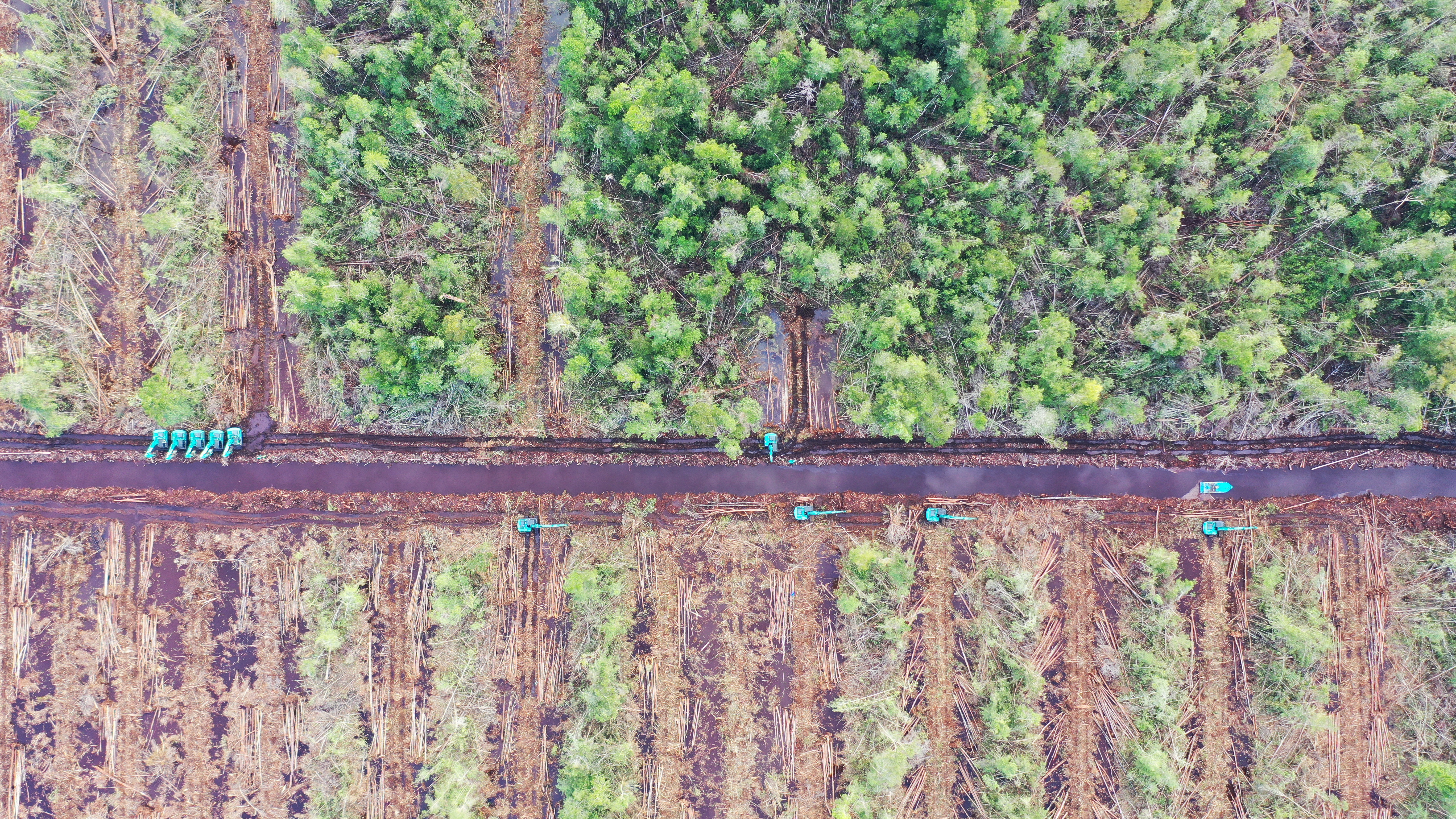
- The PBPH concessions of PT Mayawana Persada (MP) and PT Industrial Forest Plantation (IFP) rank first and second, respectively, among the worst deforestation offenders in the forestry sector, having cleared more than 33,000 hectares and 14,000 hectares of high-value tropical forest since 2020.
- PT MP and PT IFP have destroyed the habitat of the endangered Bornean orangutan and are in conflict with local and indigenous communities. Local community leaders report that PT MP has logged sacred forests and agricultural lands — their primary economic livelihood — in violation of agreements the company signed with them. Villagers whose lands overlap with PT IFP’s concession report that fishing and timber collection have become increasingly difficult since the company began logging, and that the company has failed to honor its promise to provide crops to support community livelihoods.
- APRIL has reviewed and updated its Sustainable Forest Management Policy (SFMP 2.0). In a letter to Earthsight, APRIL confirmed that it has shifted its deforestation and conversion cut-off date from 2015 to December 31, 2020.
- On June 1, 2026, 23 NGOs from Indonesia, Europe, the United States, and Canada wrote to APRIL condemning its decision to accept deforestation perpetrators as suppliers. The letter demanded the removal of PT IFP and PT MP from the supplier list and the reinstatement of the sustainable forest policy with a 2015 deforestation cut-off date.
- APRIL is part of the RGE Group conglomerate owned by tycoon Sukanto Tanoto and his family. APRIL comprises a group of companies that produce and trade paper and cardboard products for global markets, as well as wood pulp used for viscose fiber.
- Asia Symbol’s decision to halt wood chip supply from PT Balikpapan Chip Lestari (BCL) — which had been sourcing logs from PT IFP — constitutes evidence that IFP was engaged in forest conversion in violation of the Group’s zero-deforestation commitment.
- Royal Golden Eagle (RGE) manages a range of global natural resource-based manufacturing companies. Its business groups include: 1. Asia Pacific Resources International Holdings Limited (APRIL), engaged in pulp, paper, and viscose production in Riau, Indonesia. 2. Asia Symbol, a leading pulp and paper producer operating in China. 3. Asian Agri, one of Indonesia’s largest palm oil producers. 4. Apical Group, engaged in palm oil refining and processing in Indonesia and China.
- A Greenpeace investigation examining 194 Indonesia-based companies and 63 overseas parent companies found companies clearing orangutan habitat for monoculture timber plantations, and companies purchasing palm oil grown within wildlife sanctuary areas. From early 2021 through May 2024, 68,000 hectares of deforestation occurred across concessions believed to be under common control with the RGE/Tanoto group.
- On the evening of Tuesday, January 20, 2026, the Minister-Secretary of State announced that the President had revoked 28 permits — comprising 22 companies holding Forest Utilization Business Permits (PBPH) for natural and plantation forest, and 6 companies in mining, plantations, and timber forest product utilization (PBPHHK).
- Letter from the Directorate General of Sustainable Forest Management, Ministry of Forestry, Number S.360 of 2024, dated March 28, 2024, concerning the cessation of logging activities in logged-over areas (LOA) within PT Mayawana Persada’s PBPH-HT working area in West Kalimantan.