
Indigenous Peoples And CSOs Endorse Jakarta Declaration
28 organizations urge States and other actors to protect the lives, territories and rights of Indigenous Peoples in Isolation.
JAKARTA, Indonesia — March 2nd, 2026 — Today, representatives of Indigenous Peoples, Indigenous organizations and civil society organizations from Indonesia, Philippines, Brazil, Colombia, Peru, Suriname, Paraguay, US, Russia, Denmark, UK, adopted the Jakarta Declaration, a document that calls for the protection of Indigenous Peoples in Isolation, namely Indigenous Peoples living in limited contact as well as those who choose to have no contact at all, known in international agreements as PIACI (an abbreviated Spanish-language term, Pueblos Indígenas en Aislamiento y en Contacto Inicial).
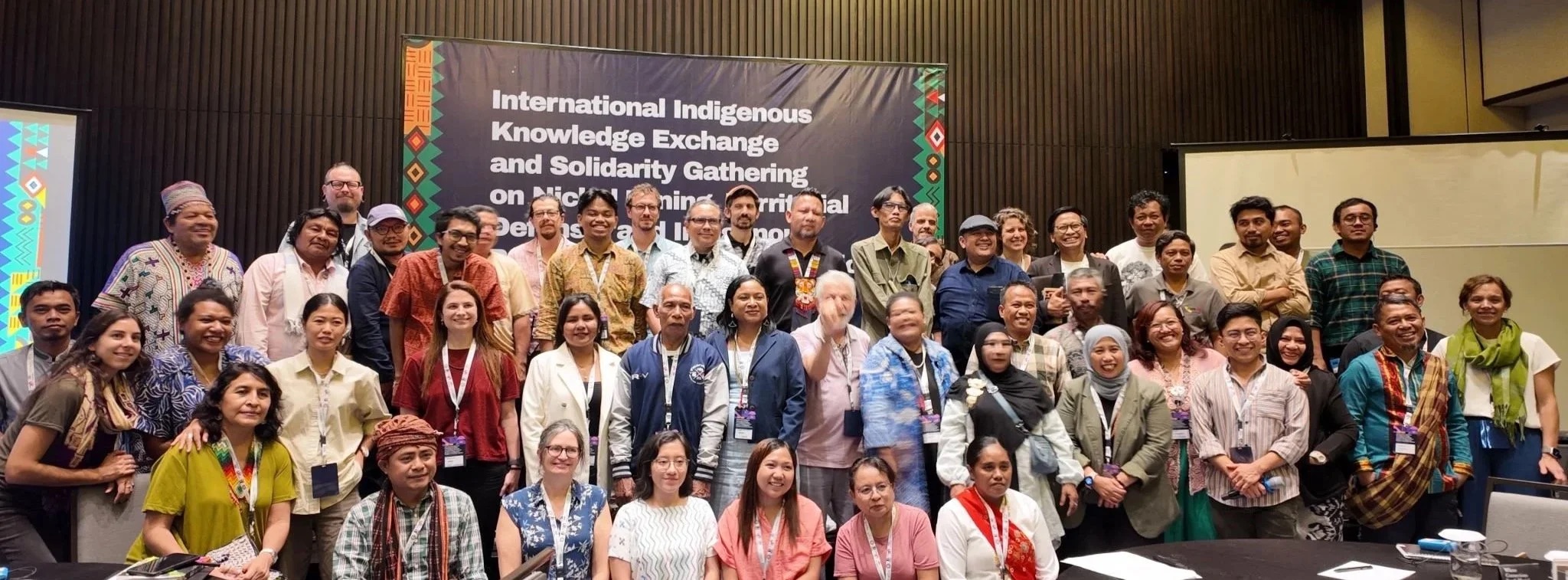
The Jakarta Declaration is the culminating document of the International Indigenous Knowledge Exchange and Solidarity Gathering on Nickel Mining, Territorial Defense, and Indigenous Peoples in Voluntary Isolation, which took place in Jakarta, Indonesia on January 26-29, 2026 and brought together over seventy Indigenous leaders and civil society representatives to discuss the best ways to protect the rights of Indigenous Peoples in Isolation in the context of the energy transition and the risks posed by an increased demand for transition minerals across the world. The document, endorsed by 28 organizations, outlines a set of calls on States, Multilateral Institutions, national and international financial institutions and global supply chains to take concrete and urgent action to protect the rights of PIACI.
“In many regions, the existence of Indigenous Peoples in Isolation is increasingly threatened by the expansion of extractive industries, infrastructure development, and similar activities. These threats largely stem from state policies that disregard Indigenous Peoples’ rights. The presence of such development projects endangers the sustainability and future of Indigenous Peoples, particularly Indigenous Peoples in Isolation”, states the Declaration.
“The idea for this dialogue emerged from the expert meeting of the UN Permanent Forum on Indigenous Issues (UNPFII) on Indigenous Peoples in Voluntary Isolation and Initial Contact (PIACI) held in December 2024, where SIRGE participated as an expert member” explains Galina Angarova, from the Ekhirit nation of the Buryat People, and Executive Director of the SIRGE Coalition. “That conversation made clear that the accelerating energy transition is creating new and urgent risks for some of the most vulnerable Indigenous Peoples globally. In follow-up discussions with partners in Indonesia we learned more about the situation of the Hongana Manyawa people, who are Indigenous Peoples in Isolation on Halmahera Island, where 19 nickel mining concessions overlap with their territory. This represents an existential threat. SIRGE co-organized this gathering because the global demand for transition minerals cannot override the rights and survival of Indigenous Peoples. At a time when nickel extraction is expanding rapidly in Indonesia, it was critical to create a space centered on Indigenous voices, to ensure that the energy transition is truly rights-based and does not reproduce extractive harm. Protecting PIACI is not a peripheral issue, it is a litmus test of whether the transition is truly just.”
Representatives of endorsing organizations offered the following quotes:
Quote from SURVIVAL INTERNATIONAL:
"This landmark declaration symbolises how Indigenous peoples worldwide are coming together to demand protection for their uncontacted and isolated relatives. It affirms that extractive industries such as logging and mining must be banned on uncontacted Indigenous peoples' lands, as they cannot give their free, prior and informed consent to such projects. It also calls for anyone else seeking to exploit such peoples to be banned too, whether they're missionaries, adventure tourists or influencers. Uncontacted peoples have the right to exist, and can only do so if their territories are recognized and protected – it's as simple as that."
– Sophie Grig, Senior Research and Advocacy Officer at Survival International
Quote from SIRGE and Tallgrass:
“Indigenous Peoples Living in Voluntary Isolation are activating their core right to self-determination, which must be respected through the principles laid out in the Jakarta Declaration. This delegation brought together the collective wisdom, expertise and experience of Indigenous Peoples from Indonesia and South America where the largest populations of Indigenous Peoples in Isolation live, to build strategies for their protection. Companies must cease financing and developing projects that diminish the water and land on which these communities rely, and investors and allies, through this Declaration, have a new roadmap to safeguard their rights.”
– Kate R. Finn, Osage Nation, Founder and Executive Director, Tallgrass Institute
Quote From AMAN:
“Indigeous Peoples are the guardians of the forest, specifically for Indigenous Peoples’ In Voluntary Isolation and uncontacted area who decide to protect their Indigenous Territory should recognise and protected from any extractive activities referring to COP 30 in Belém, Brazil, was a landmark summit for Indigenous rights, achieving unprecedented recognition for Indigenous Peoples in Voluntary Isolation (PIACI) within Just Energy Transition frameworks”.
- Rukka Sombolinggi, AMAN Secretary General.
Quote From PPMAN:
“In this learning exchange, every victim's story is knowledge, every advocacy experience is a strategy, and every meeting is a step towards justice”.
- Syamsul Alam Agus, The Chairman Of PPMAN
Quote From Auriga Nusantara:
“We are experiencing a huge expansion of critical mineral exploitation in Indonesia. Besides deforestation and environmental harms, the expansion threatens indigenous peoples and local community territories, including indigenous peoples in isolation and initial contact like O’Hongana Manyawa territory in North Molucca Provinces which are aimed to supply one of the biggest nickel smelters in the world whose production are used by international automakers. Protecting their territory through a No Go Zone mechanism is the first step to implement its self-determination principles”.
- Timer Manurung, Executive Director, Auriga Nusantara.
Quote from GTI PIACI:
“This declaration is a global voice of resistance. The declaration manifests the urgency to respect self determination in its purest form, by demanding that the rights of indigenous peoples in isolation and initial contact are recognized and their territories remain free from incursions. Still today, amidst a global extractive drive over natural resources indigenous people in the tropics world wide resist colonization in the depths of the forest by choosing to avoid contact with larger society. It is our ethical and legal imperative to respect this decision. We expect governments, multilaterals and companies to consider this declaration as a guiding document for decision making”.
- International Working Group for the Protection of Isolated People and Initial Contact - GTI PIACI
The Jakarta Declaration is available in English, Spanish, Portuguese and Bahasa.
Contact:
- Ki Bagus Hadikusuma, Mining and Energy Team Leader, Auriga Nusantara, kibagus@auriga.or.id
- Juan Diego Beltrán, Communications Associate, SIRGE Coalition, juandiego@sirgecoalition.org