Coral Transplantation: Sagea Community and Auriga Nusantara Collaborate to Restore Marine Ecosystem in Weda Bay, Halmahera
Sagea, North Maluku, 4 May 2026 – Together with local community members, Auriga Nusantara is undertaking coral transplantation in the waters of Sagea Village, North Weda Subdistrict, Central Halmahera Regency, as part of an effort to restore marine ecosystems impacted by sedimentation from industrial nickel mining on Halmahera Island, North Maluku Province.
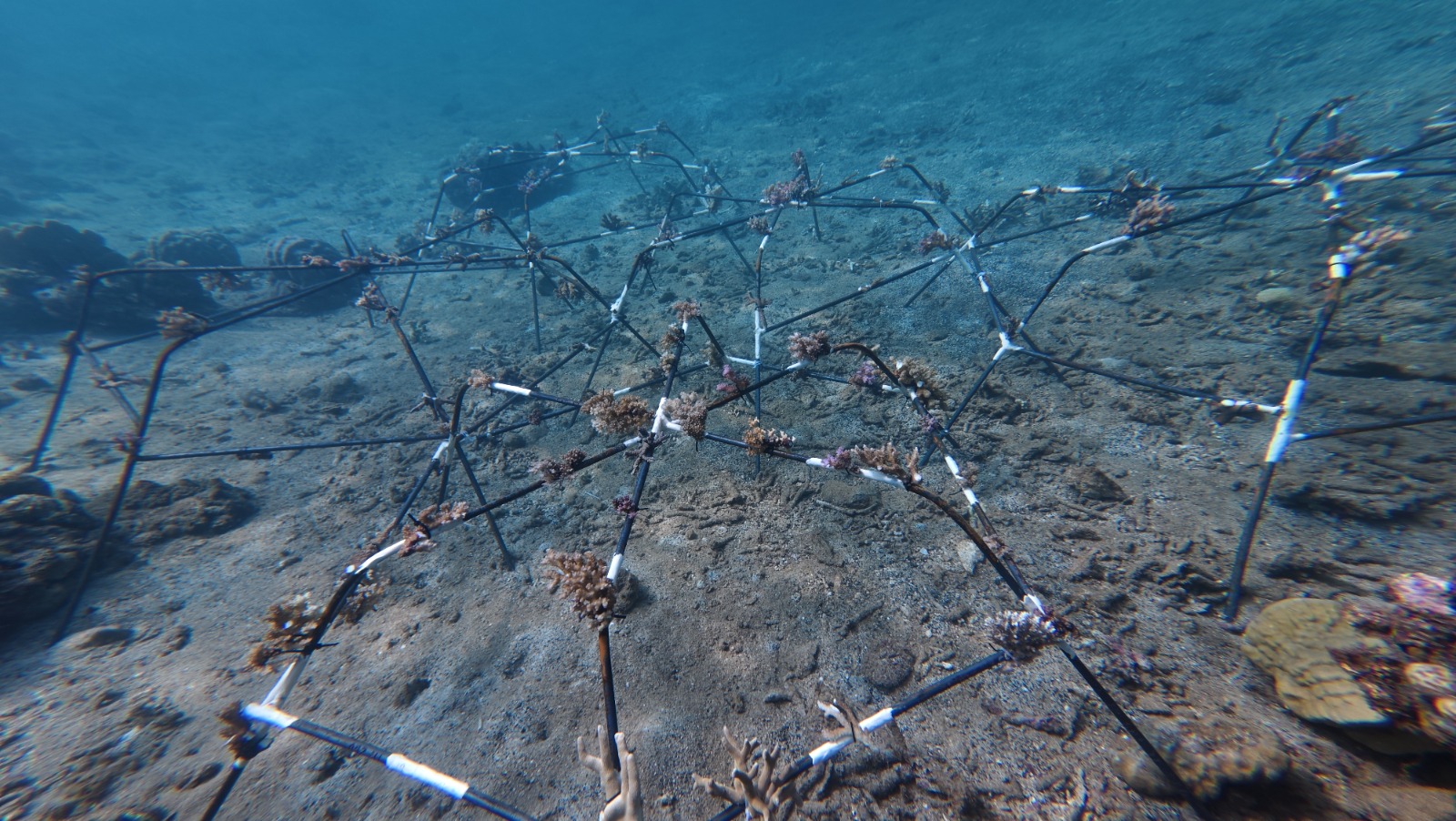
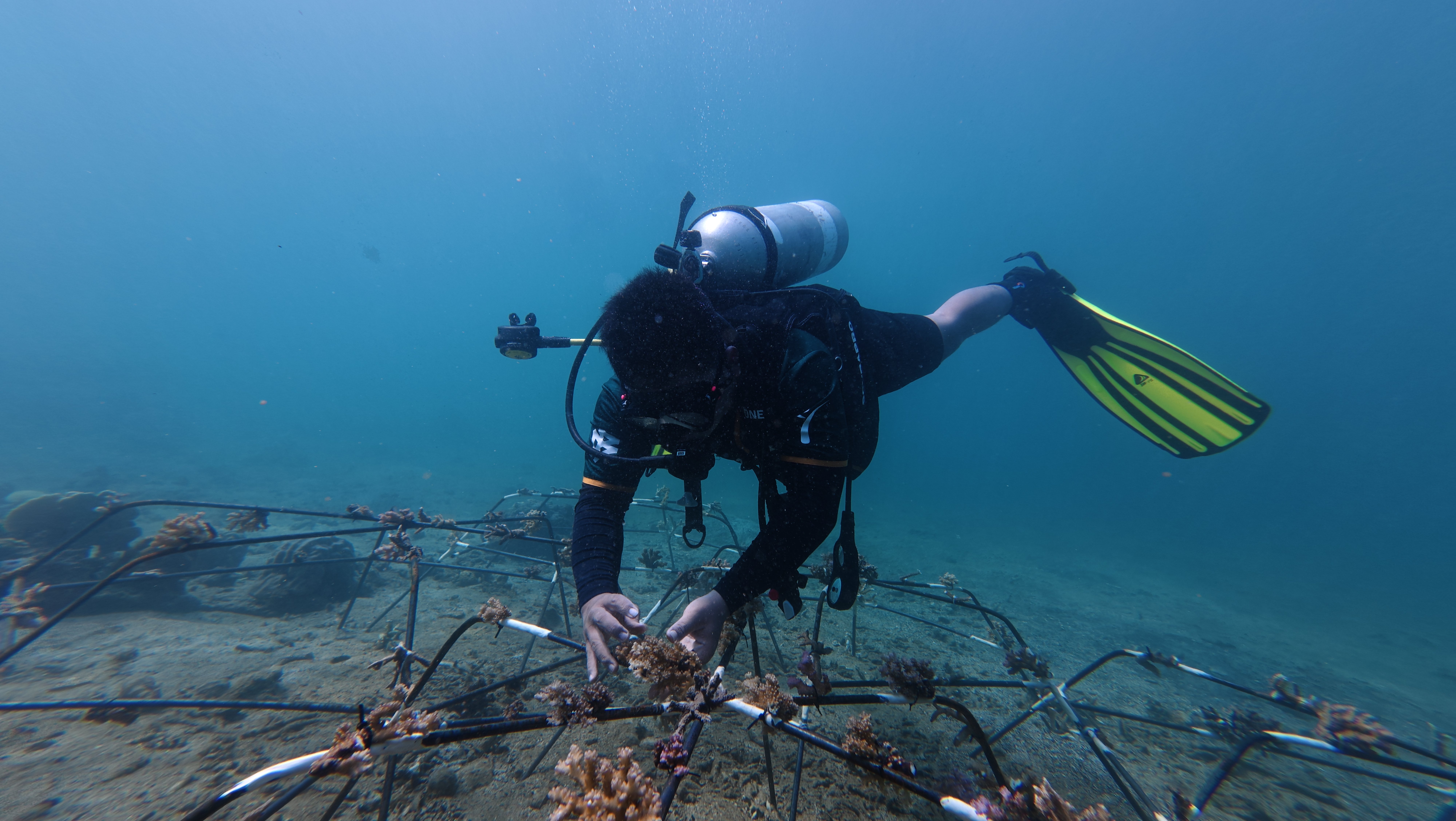
Corals following transplantation.
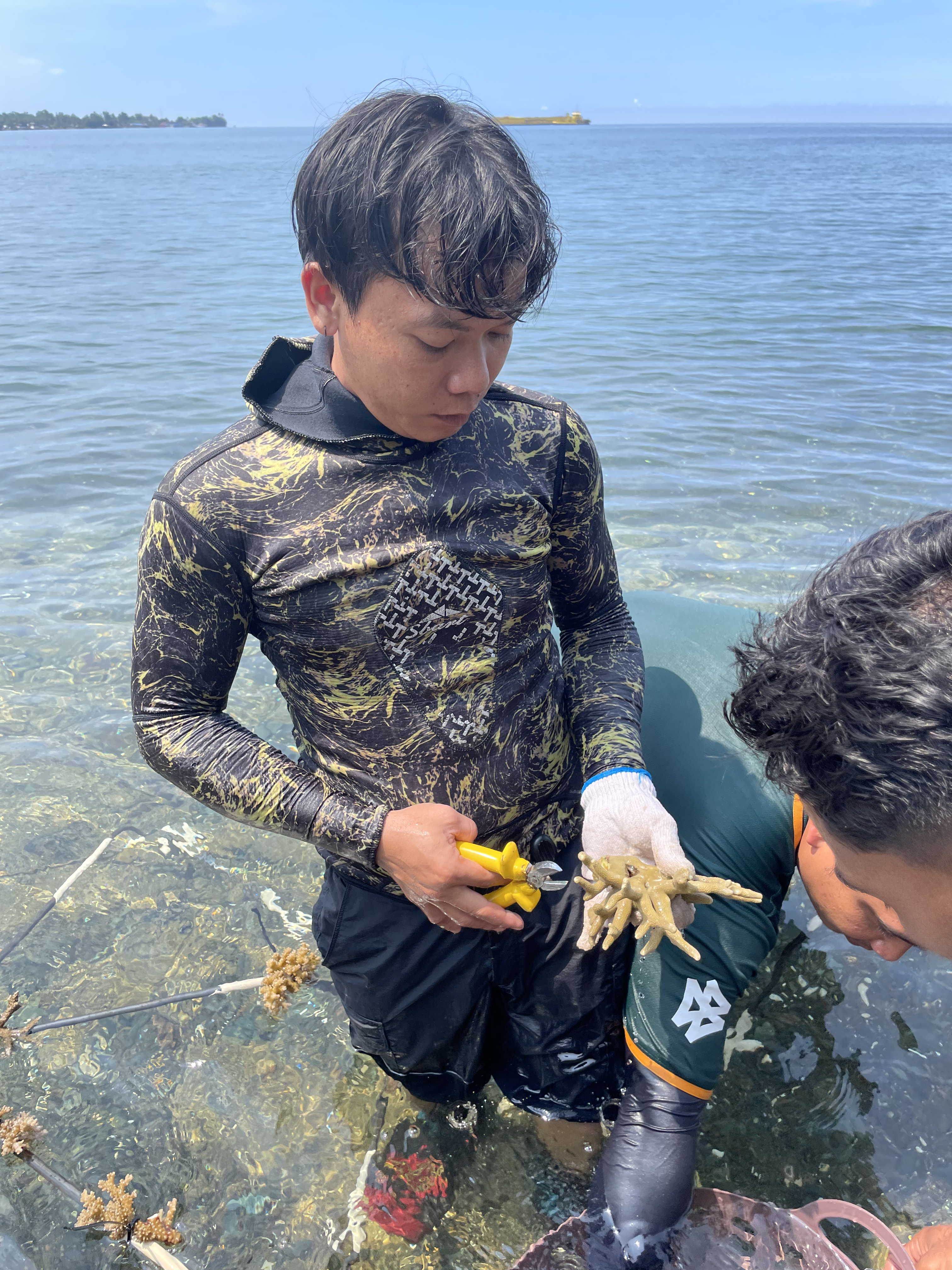
Selecting coral fragments to attach to iron spider frames.
Asexual transplantation is performed by cutting fragments of live coral, attaching them to spider frame planting media, and subsequently replanting them in areas of damaged coral and/or designated sites to stimulate accelerated natural recovery.
During these restoration activities, Acropora sp. – coral species belonging to the Complex Clade group – are transplanted onto five spider frames. Acropora is a genus of hard coral species known for being primary reef builders with growth rates of 5–10 cm per year.
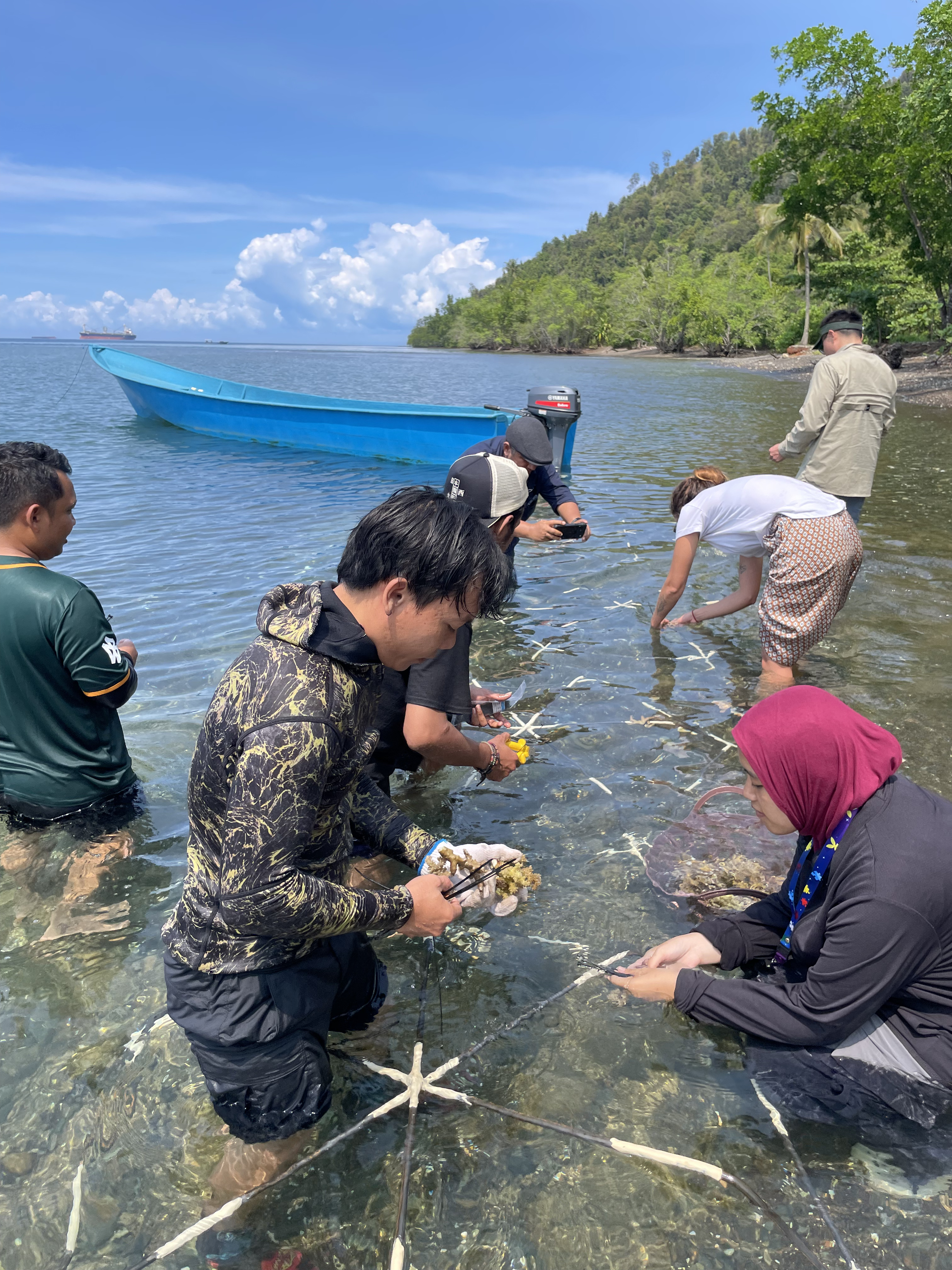
Tying coral fragments onto a spider frame.
Despite coral reefs being protected under Law No. 27/2007 on Coastal and Small Island Management, irresponsible mining activities – whether through the issuing of licenses or the implementation of mining and/or industrial practices with little regard for marine ecosystem sustainability – have significantly damaged ecosystems crucial for fisheries-based food provision. This has been the case in Central Halmahera Regency, where Weda Bay is situated. In 2022, the regency’s capture fisheries production reached 39,757 metric tons with an economic value of IDR 851.2 billion, but in 2024, production fell to 35,930 metric tons valued at IDR 787.5 billion.
Industrial nickel mining has massive environmental impacts in eastern Indonesia.
Working with local communities and stakeholders, Auriga Nusantara is committed to promoting marine ecosystem conservation in Halmahera. To aid monitoring, together with a network of civil society organizations and Gadjah Mada University’s Faculty of Geography, Auriga Nusantara is developing coral and seagrass mapping in MapBiomas Indonesia as part of its aquatic ecosystem dataset – complementing data on mangrove and aquaculture cover already available on the platform.