
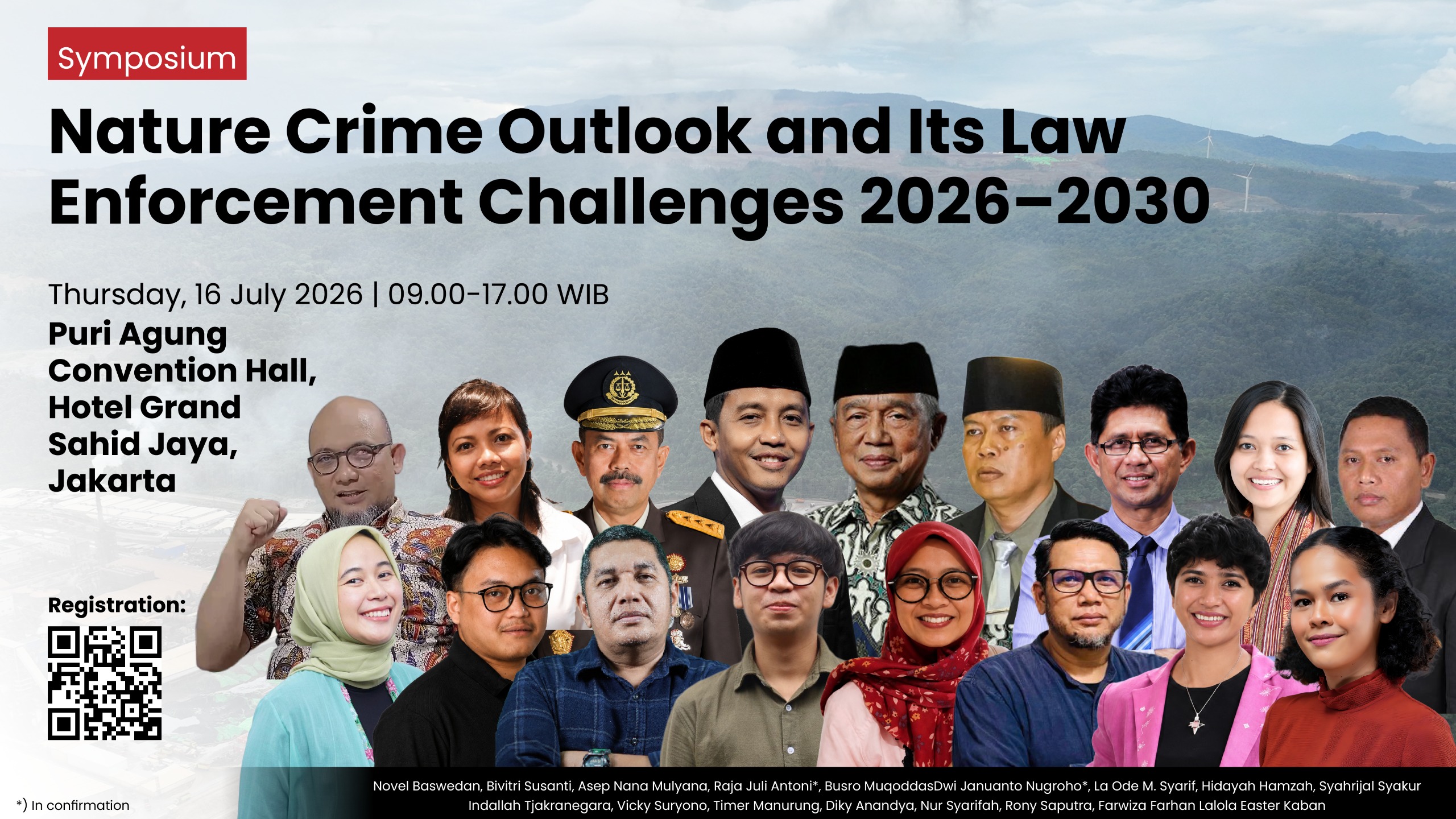
Symposium: Nature Crime Outlook and Its Law Enforcement Challenges 2026–2030
Deforestation is on the rise in Indonesia, with numbers of endangered species and extinctions among the highest in the world. Its marine ecosystems are also under increasing threat from mining industry practices and expansion. Meanwhile, there are downward trends in air and water quality around industrial areas. All of these suggest that natural resources and environmental law enforcement remain an enormous challenge in Indonesia.
At the same time, developments in the national political arena give the impression of law enforcement being far from a main priority. The institutional framework, human resources capacity, and budgets available for law enforcement remain inadequate for responding to the specific needs of the natural resources and environment sector, or for provincial or even site-level needs.
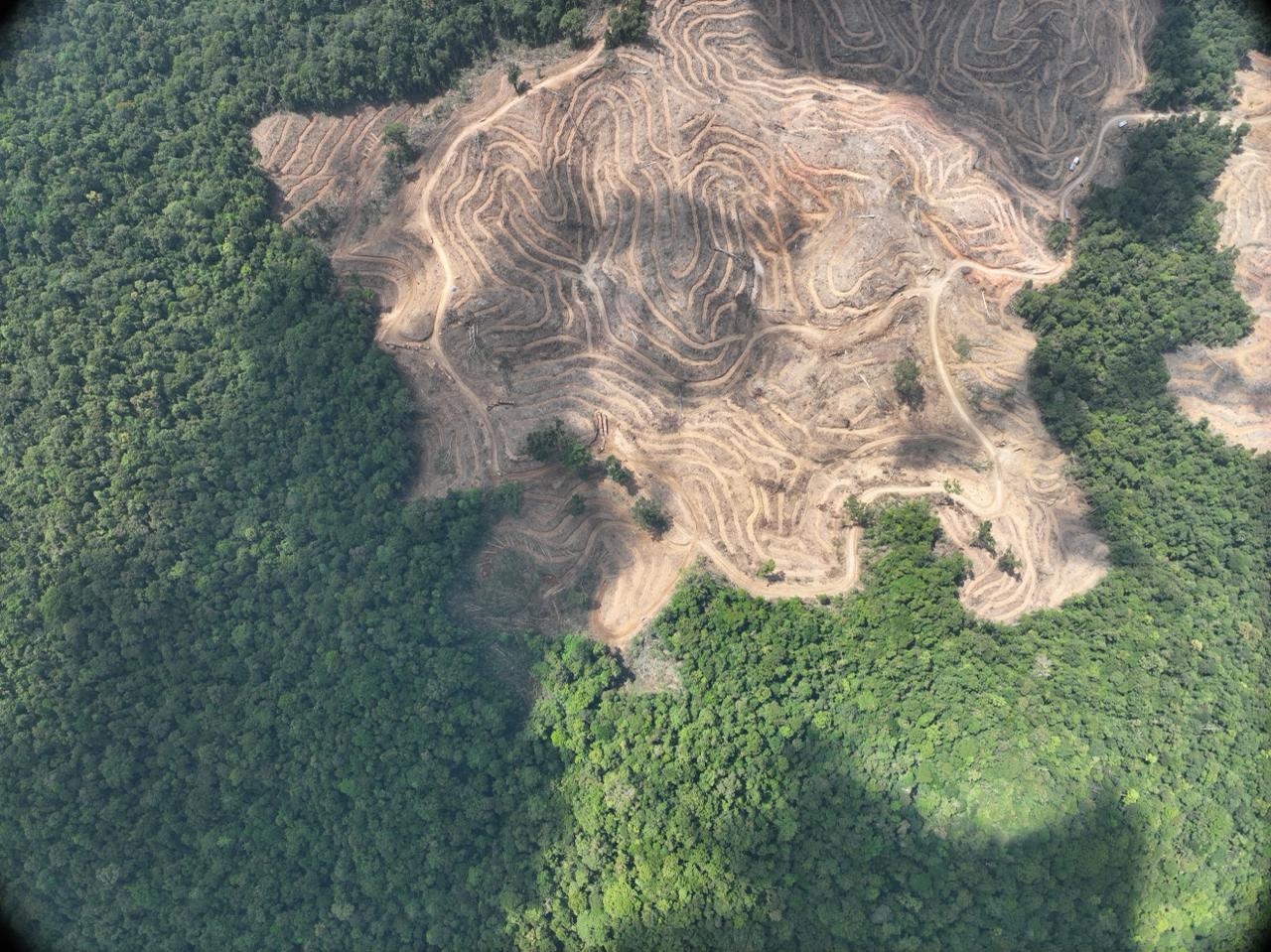
Clearing natural forest to develop a biomass timber plantation in Pohuwato, Gorontalo. A critical question is how lush natural forest habitat for protected wildlife like this can be released from the state forest estate. The companies (PT Banyan Tumbuh Lestari and PT Inti Global Laksana) applied for developing oil palm plantations, but in practice have been growing biomass timber plantations. (Photo: Auriga Nusantara, April 2026).
Auriga Nusantara studied and mapped patterns of natural resource and environmental crime in Indonesia between 2020 and 2025 by analyzing court decisions related to such cases. In-depth studies undertaken in four provinces – Aceh, North Kalimantan, North Sulawesi, and North Maluku – involved a series of consultations with relevant stakeholders. Study findings, together with input from these consultations, formed the basis for developing the Outlook on Indonesia’s Natural Resources and Environmental Crime 2026–2030.
To reach a broader audience and communicate findings to policymakers, the Outlook will be disseminated through a symposium, titling the Outlook on Natural Resources and Environmental Crime and Law Enforcement Challenges, 2026–2030.
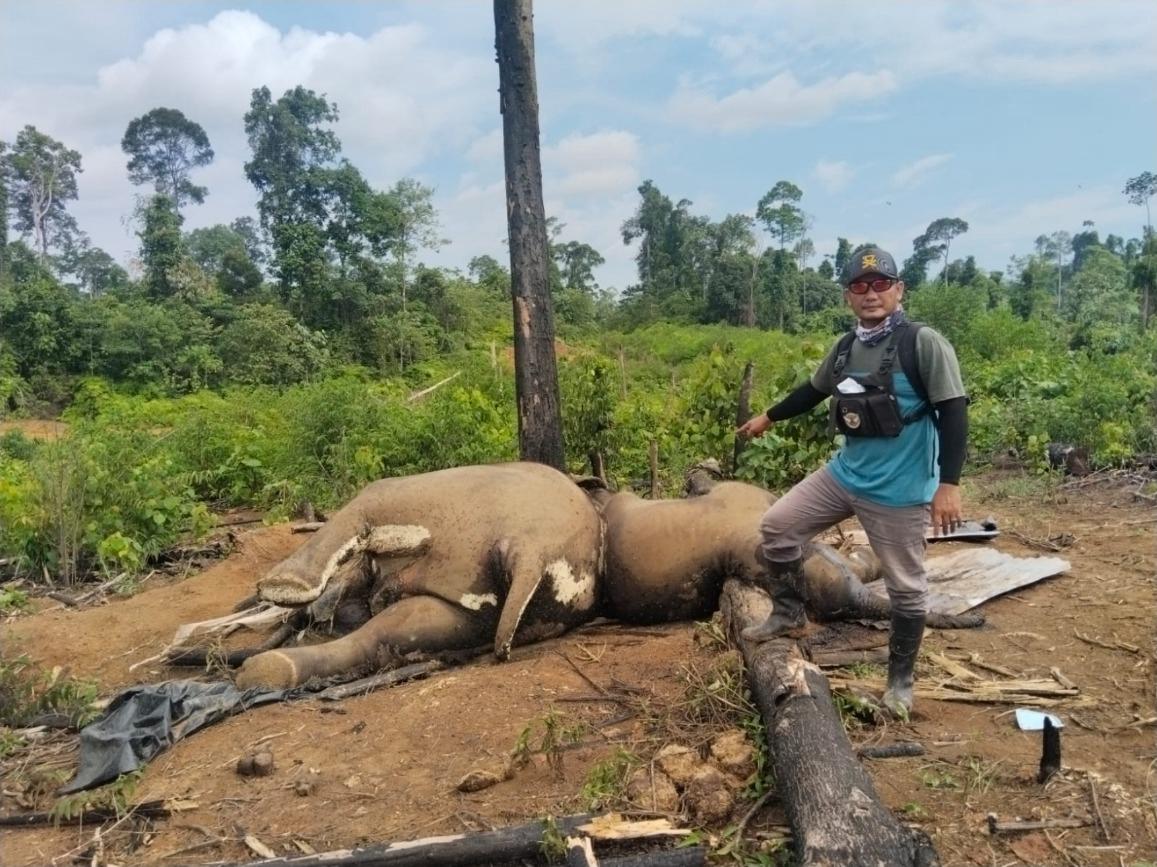
Dead bodies of mother and calf Sumatran elephants –allegedly poisoned– inside the PT Bentara Arga Timber logging concession in Bengkulu. To date, no individual or entity has been charged in connection with the killing of these protected endangered wildlife. (Photo: Koalisi Bentang Seblat, 2026).ing PT Bentara Arga Timber di Bengkulu.
The symposium is organized with funding support from the U.S. Department of State’s Bureau of Oceans, Environment and International Scientific Affairs, through the World Resources Institute.
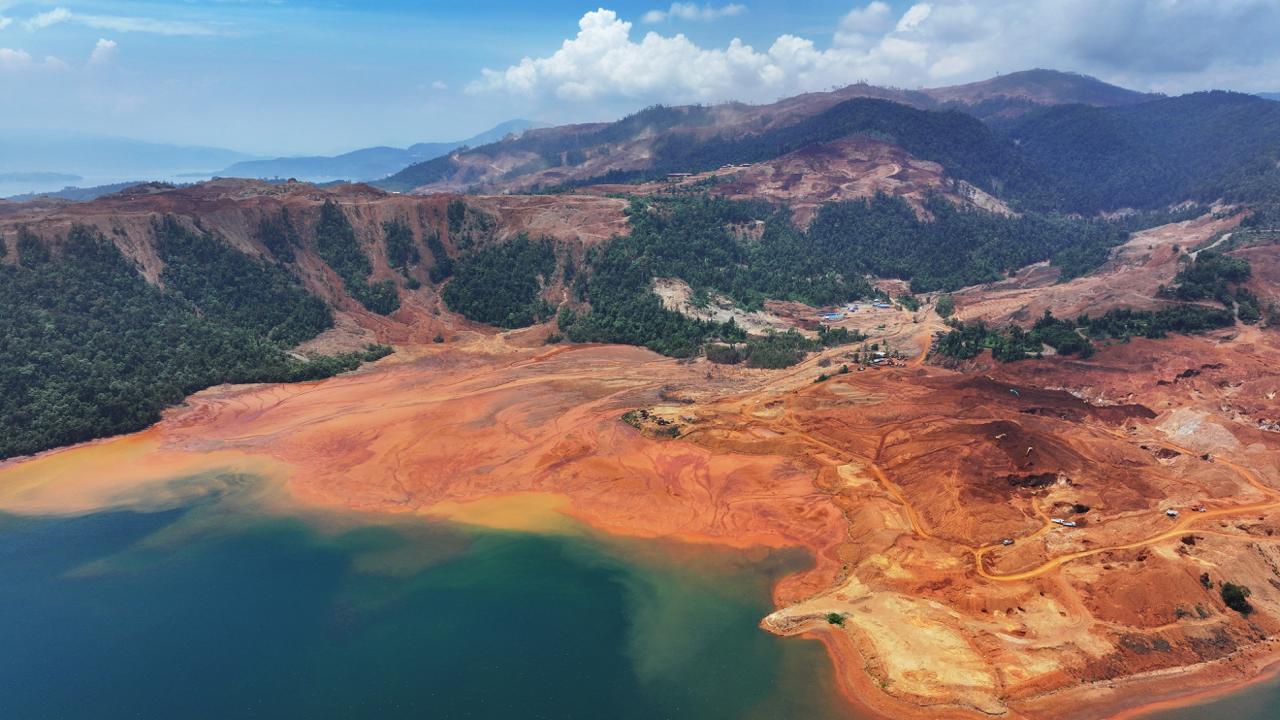
Seawater reddened by sediment from nickel mining in North Morowali, Central Sulawesi. Pollution and destruction of marine ecosystems by nickel mining are widespread across Eastern Indonesia. Yet, to date, nobody has been charged for criminal offenses for these events. (Photo: Auriga Nusantara, October 2025).
Panel 1: Natural Resources and Environmental Crime Landscapes and Typologies in Indonesia
Presenting and discussing preliminary mapping results on the characteristics, patterns, geographic distribution, and classifications of natural resources and environmental (NR&E) crimes in Indonesia, the session will focus on findings from the four study regions, complemented by trends in environmental crime cases across Indonesia based on quantitative research sourced from the Case Tracking Information System (SIPP).
Moderator Arti Indallah Tjakranegara (Programme Development Manager – Climate Justice)
Panel II: Natural Resources and Environmental Crime Patterns and Operations, and Law Enforcement Response Effectiveness
Examining evolving NR&E crime patterns and modus operandi, and analyzing the effectiveness of law enforcement authority responses to date, this session aims to identify challenges, weaknesses, and opportunities for strengthening law enforcement strategies so they can reach the intellectual actors, organized criminal networks, and corporations that benefit from NR&E crime.
Moderator Lalola Easter Kaban (Researcher – Indonesia Corruption Watch)
Systemic deforestation expansion on a steep slope inside the PT Toba Pulp Lestari timber plantation concession in the Aek Raja sector. This clearing of natural forest –preceded by road construction and illegal logging– has been occurring since 2018. During the flood and landslide disaster in northern Sumatra in late 2025, many landslides occurred nearby, leading to allegation it had contributed to the disaster, at least in North Tapanuli District. (Photo: Auriga Nusantara, December 2025).