
CBD COP 17 Dialogue Highlights the Role of Compliance Assessments and Law Enforcement in Advancing Deforestation-Free Supply Chains
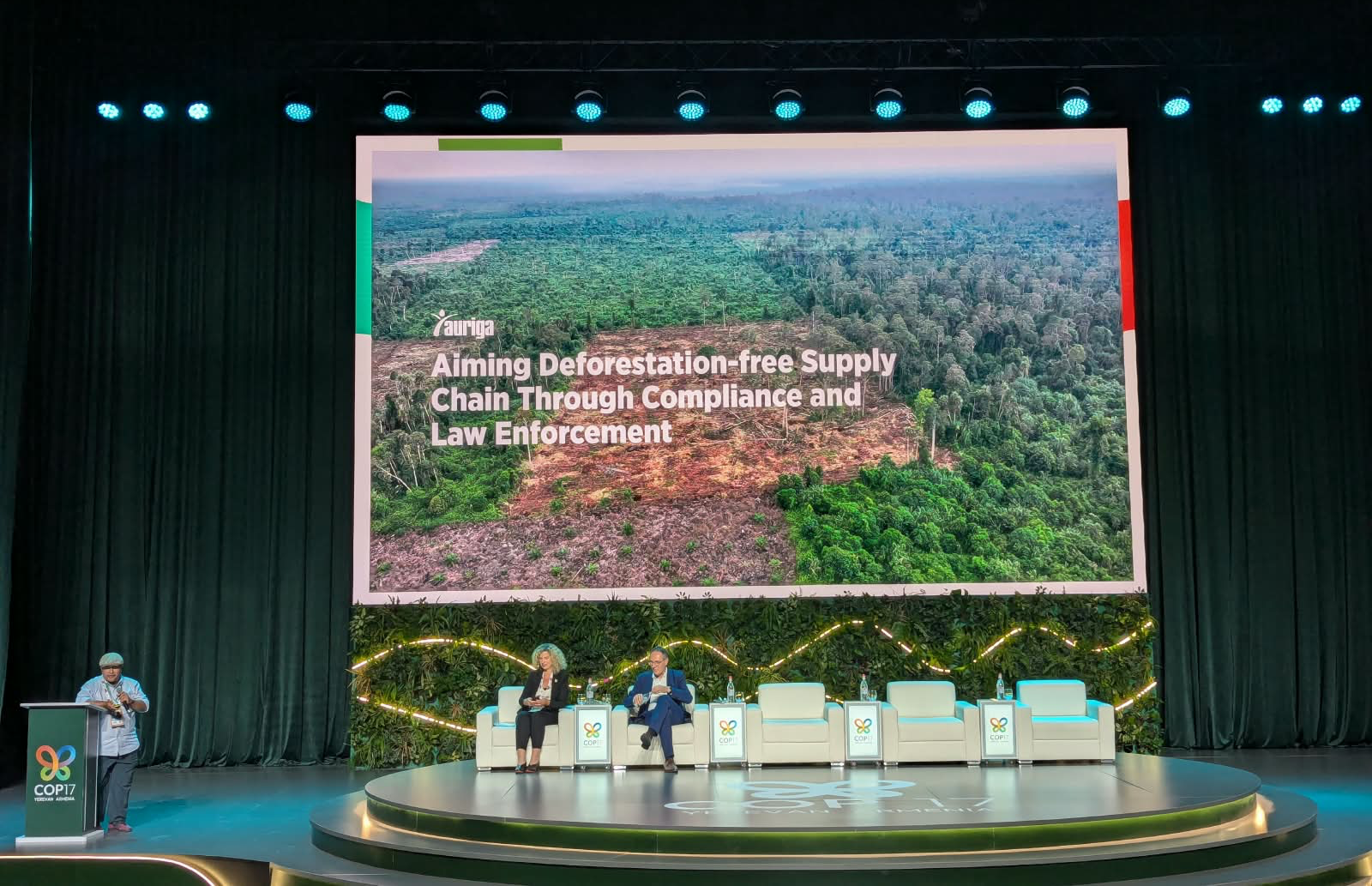
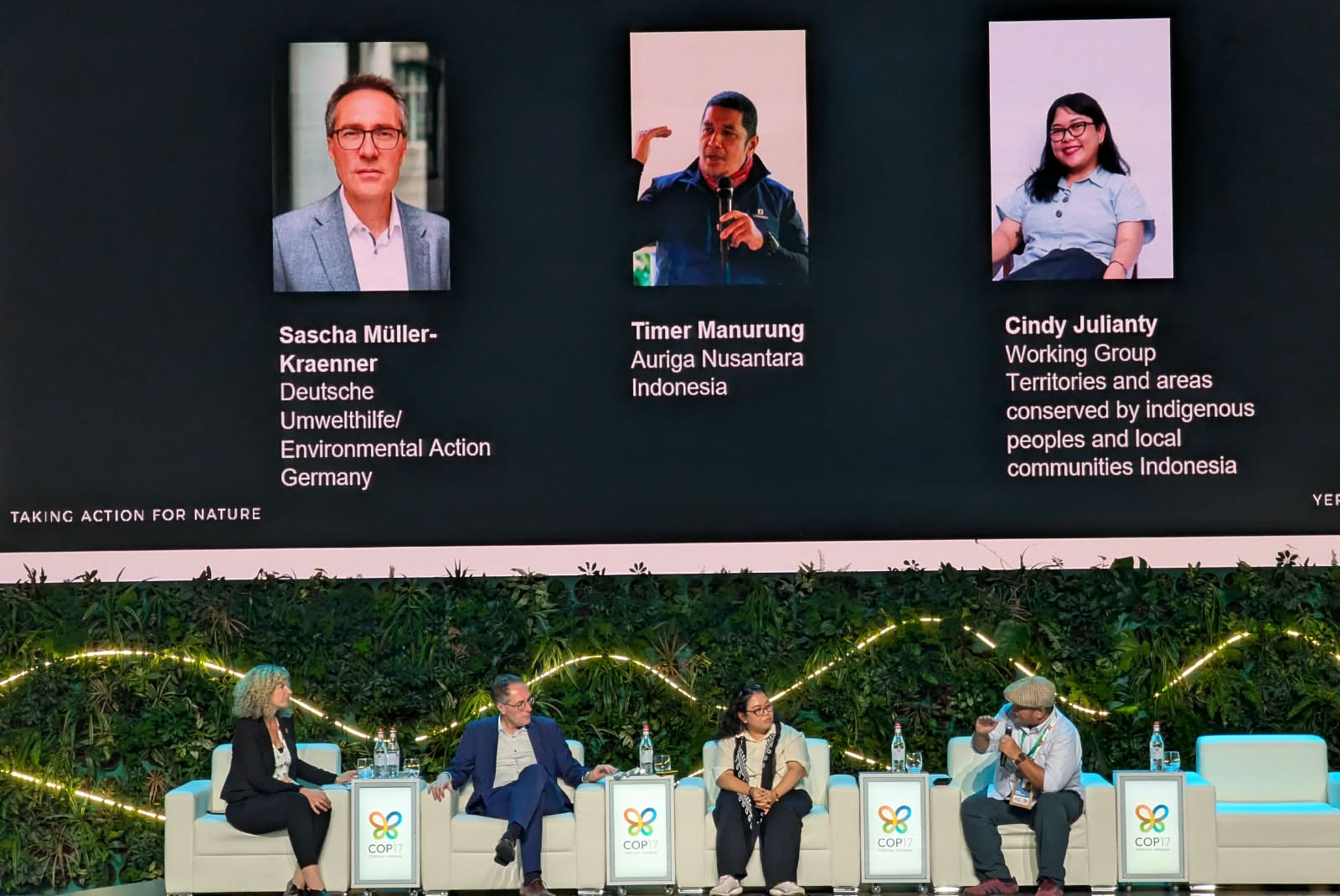
YEREVAN, 27 October 2026 — Auriga Nusantara, together with Environmental Action Germany (Deutsche Umwelthilfe – DUH) and the Working Group ICCAs Indonesia (WGII), organised a side event at the Green Zone of the 17th Conference of the Parties to the Convention on Biological Diversity (CBD COP 17), titled “From Commitment to Implementation: Connecting Biodiversity and Climate Goals through Deforestation-Free Supply Chains and Law Enforcement.”
The discussion explored the role of law enforcement and corporate compliance in advancing deforestation-free supply chains, with a particular focus on Indonesia. Deforestation and land conversion remain among the leading drivers of global biodiversity loss while exacerbating the climate crisis. Despite the establishment of national regulations and international commitments, illegal logging and legal non-compliance continue to pose significant challenges. This makes the implementation of deforestation-free supply chains increasingly urgent to safeguard climate stability and ecosystem integrity.
As a megabiodiversity country, Indonesia provides a clear example of both the complexity of these challenges and the significant opportunities for strengthening corporate accountability. The discussion emphasised that achieving deforestation-free supply chains requires more than regulations alone. It also depends on active collaboration among the private sector, local governments, civil society organisations, and Indigenous Peoples and Local Communities (IPLCs).
Representing Auriga Nusantara, Executive Director Timer Manurung highlighted the importance of advancing deforestation-free supply chains through corporate compliance assessments and law enforcement. He pointed out that of Indonesia’s total forest area of 118,110,725 hectares, 41.6 million hectares of natural forest cover remain without legal protection. Meanwhile, total deforestation during the 2021–2025 period reached 1.4 million hectares. In 2025 alone, deforestation surged significantly to 433,751 hectares, of which 58% was classified as legal deforestation.
In response to these challenges, firm law enforcement—including case investigations, administrative sanctions, and the revocation of permits for companies found to be in violation—can help curb large-scale forest clearance. Auriga Nusantara sees an important role for civil society organisations in this process through research and evidence-based findings that can serve as references for relevant authorities in conducting compliance audits and inspections. These efforts can ultimately lead to further investigations and permit revocations where violations are established.
By strengthening legal compliance, promoting evidence-based monitoring through spatial data, and fostering cross-sector collaboration, deforestation-free supply chains can move beyond commitments on paper and become tangible actions to protect biodiversity and mitigate the impacts of the global climate crisis.
The side event was attended by approximately 25 participants, including representatives of Indonesian civil society organisations and members of the public.
Media Contact: Vicky Afris Suryono (diplomacy@auriga.or.id)