
Bangkok Dialogue Calls for Collective Action to Break the Cycle of Forest Fires and Transboundary Haze
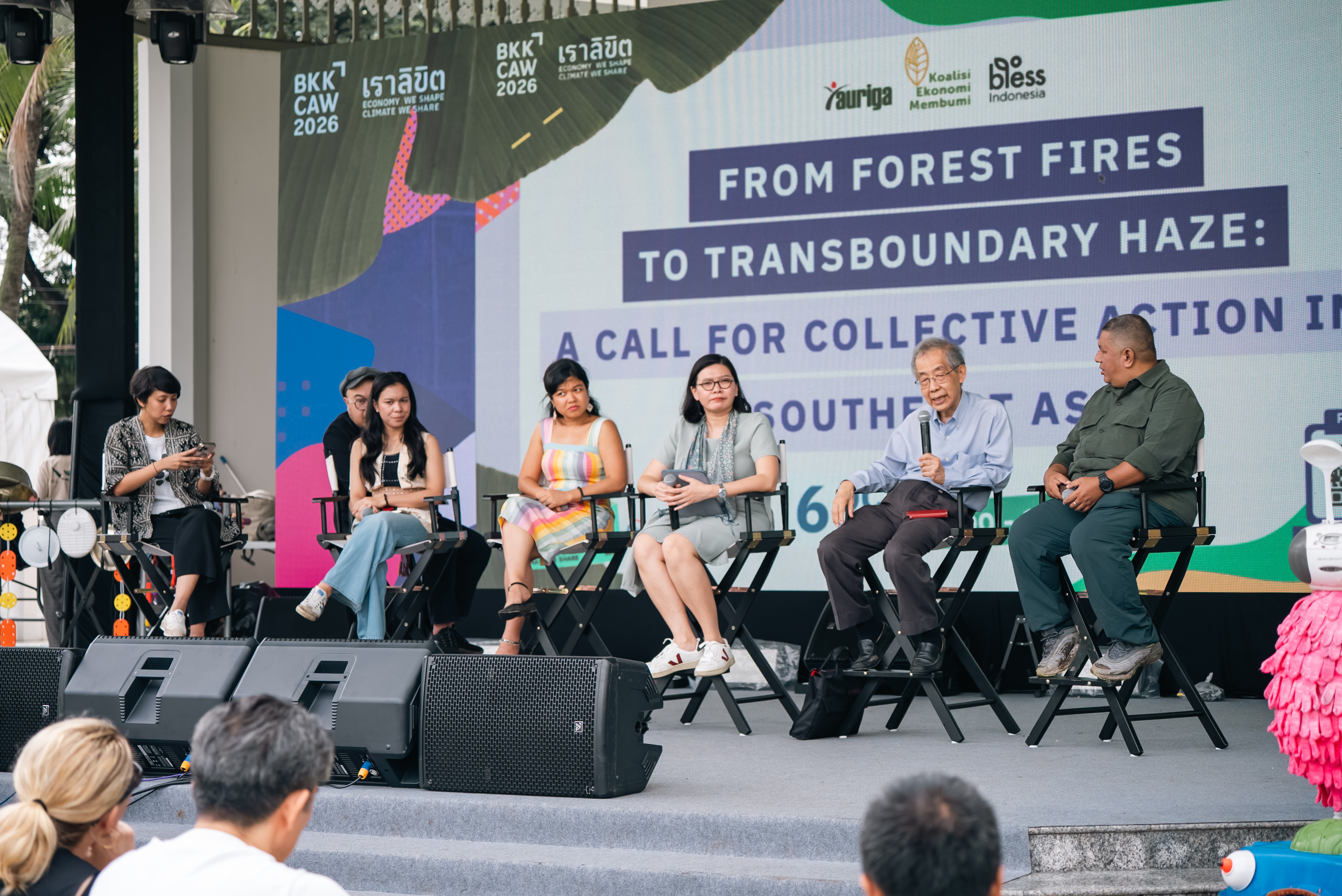
BANGKOK, 6 October 2026 — As haze from Indonesia’s 2026 forest and land fires, again, crosses borders, civil society leaders and ASEAN experts met in Bangkok to discuss why the problem persists and what regional cooperation should look like. Organized by Auriga Nusantara in collaboration with Koalisi Ekonomi Membumi and BLESS Indonesia, the talk show, “From Forest Fires to Transboundary Haze: A Call for Collective Action in Southeast Asia,” was held in Bangkok, Thailand, as part of Indonesia’s Nature-based Economy Pavilion at Bangkok Climate Action Week 2026.
Guiding the conversation was Gita Syahrani from Koalisi Ekonomi Membumi, who moderated the discussion by drawing on perspectives from Indonesia, Malaysia, Singapore, and Thailand. The discussion began with what the monitoring data reveals. Timer Manurung from Auriga Nusantara stated that MapBiomas Indonesia had identified fires in around 3,000 concessions, far more than the 72 companies publicly named. He questioned whether those arrested were the main actors responsible and warned that revoking permits without proper management risks leaving land abandoned and vulnerable to new fires.
Yet evidence alone has rarely translated into action, as the regional picture made clear. Melinda Martinus, fellow researcher from ISEAS - Yusof Ishak Institute, who studied how ASEAN countries can raise their climate ambition, noted that ASEAN has built substantial frameworks, including the ASEAN Agreement on Transboundary Haze Pollution, a roadmap that now covers peatland governance, and satellite monitoring. She argued that the bigger challenges lie in national jurisdiction over permits, coordination across agencies, and attributing liability. “We can detect where a fire originates,” she said, but the harder question is what happens next.
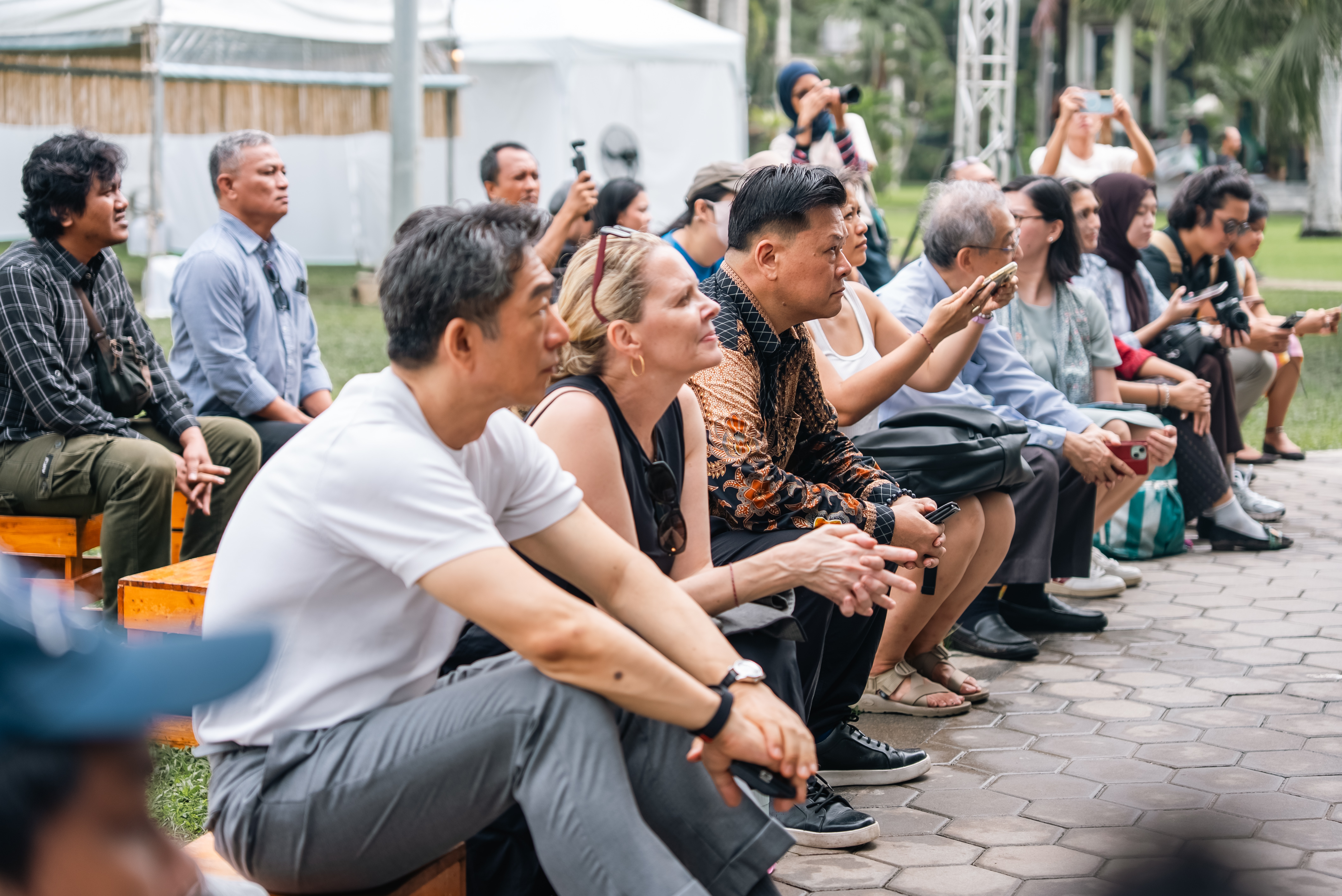
So, where could stronger leadership come from? Few are better placed to answer than Apichai Sunchindah, who headed the Environment Division at the ASEAN Secretariat when the haze agreement was initiated. Drawing on four decades of regional experience, he proposed that Singapore use its 2027 ASEAN chairmanship to prioritise haze. He also urged that the issue be brought into ASEAN’s economic agenda, including the planned green economy framework agreement, with agriculture and forestry authorities involved alongside environment ministries.
“Finance can move across borders in a way that governance cannot.” — Khairun Nisa Zabidi, Nusanterra
Beyond government action, the money behind land use also came under scrutiny. Climate and nature finance specialist Khairun Nisa Zabidi from Nusanterra called for banks and investors to stop financing the conditions that create haze, and to change behaviour rather than simply withdraw. She also urged that communities be treated as essential “infrastructure” for fire prevention, not only as beneficiaries.
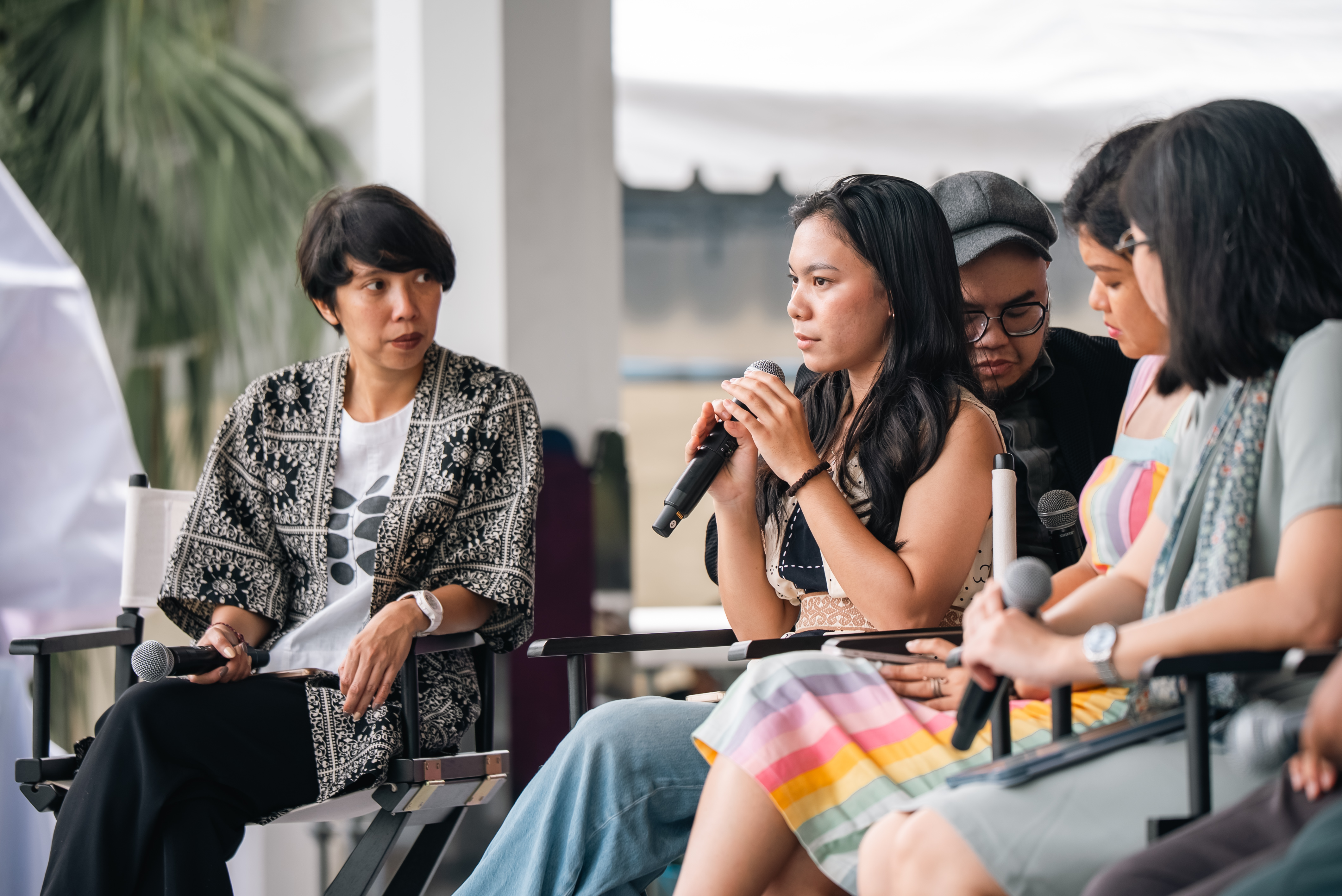
At the community level, the picture looks different. Yessy Octavia Mangasih, a member of the indigenous Sungai Utik longhouse community in West Kalimantan and now works at Kalara Borneo, highlighted tembawai, the traditional agroforestry practice in the region that integrates environmental stewardship with local economic activities. She shared how Kalara Borneo, a bean-to-bar chocolate company, sources cocoa from local farmers and empowers women in the community. She also encouraged participants to reflect on how their consumption choices affects people and forests in Kalimantan.
Closing the session, Gita reflected on the intergenerational mix of voices on the panel and noted that speakers agreed on Southeast Asian governments must move beyond regional commitments and tackle the underlying causes of recurring fires. She summed up the discussion with the acronym BREAK: look behind at what history can teach, reform the system, widen the frame beyond environment to health and the economy, acknowledge opportunities such as traceability and following the money, and draw on the knowledge of ancestors.
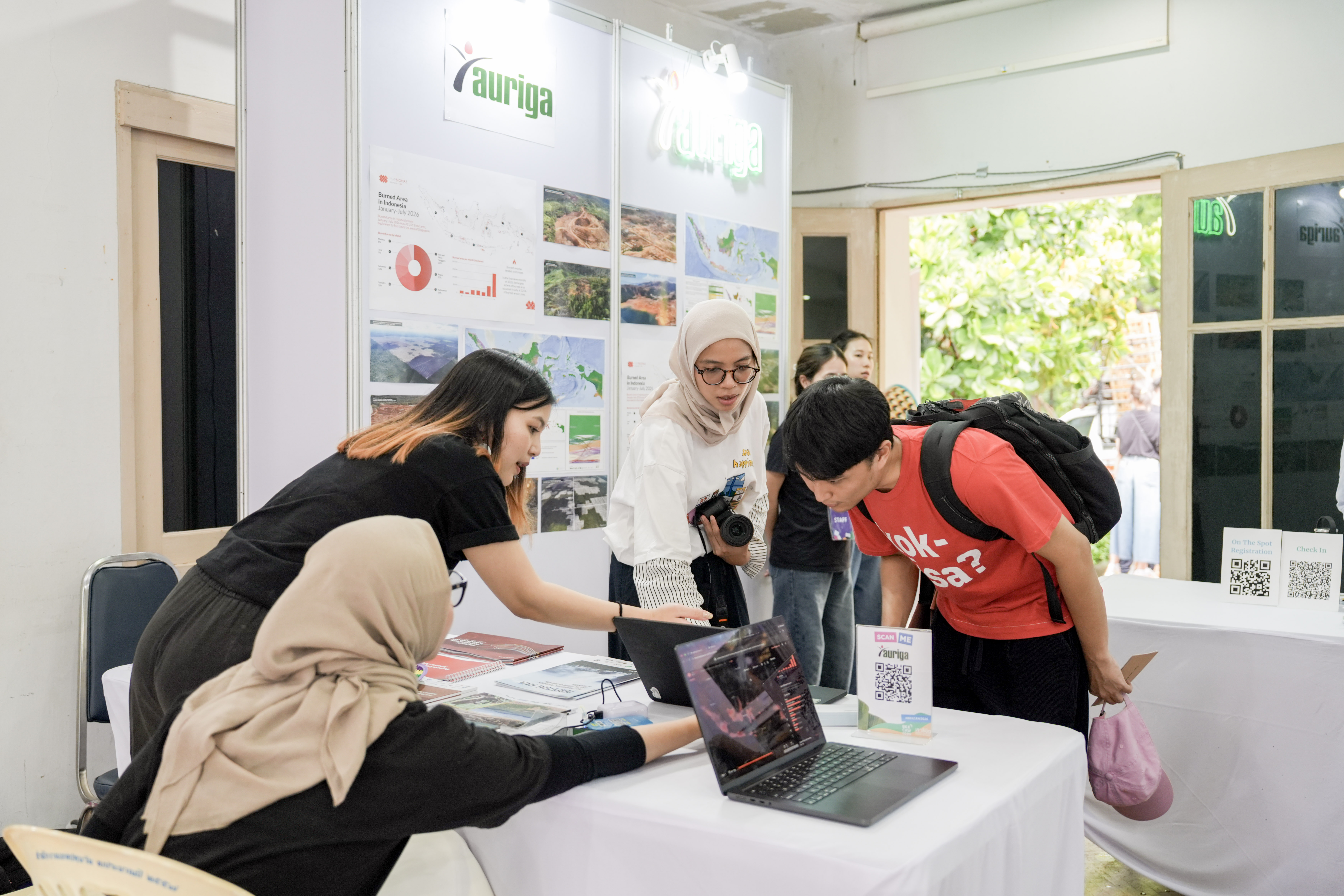
Beyond the panel, Auriga Nusantara turned data into hands-on experience at the Nature-based Economy Pavilion exhibition on 5-7 October. Visitors tried Auriga’s flagship products such as MapBiomas Indonesia, Simontini, and Trase on site, with Auriga’s spatial analysis team ready to walk them through each platform and picked up the latest Auriga publications. Auriga also used the occasion to connect with NGOs across Southeast Asia and welcomes future collaboration.